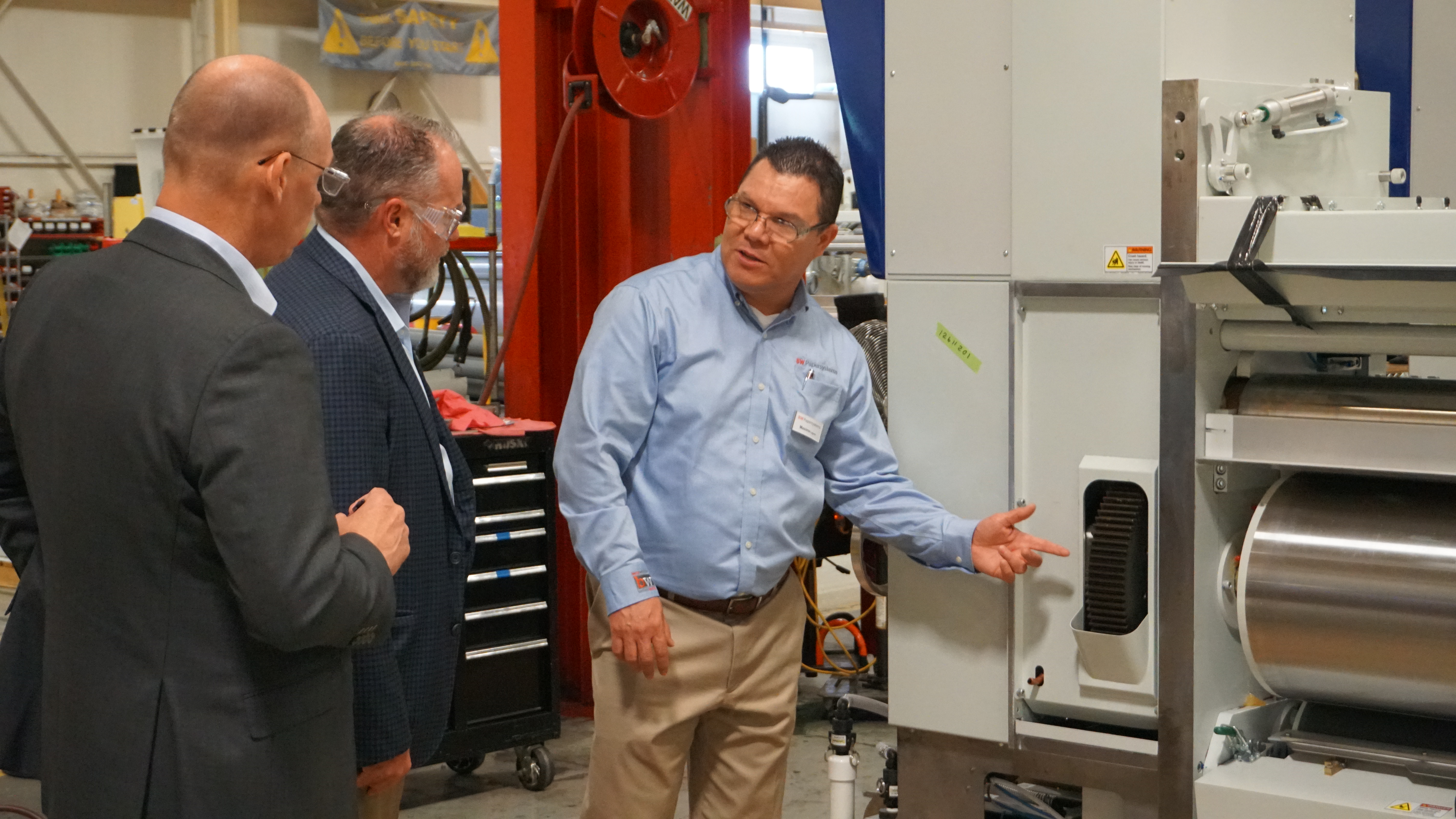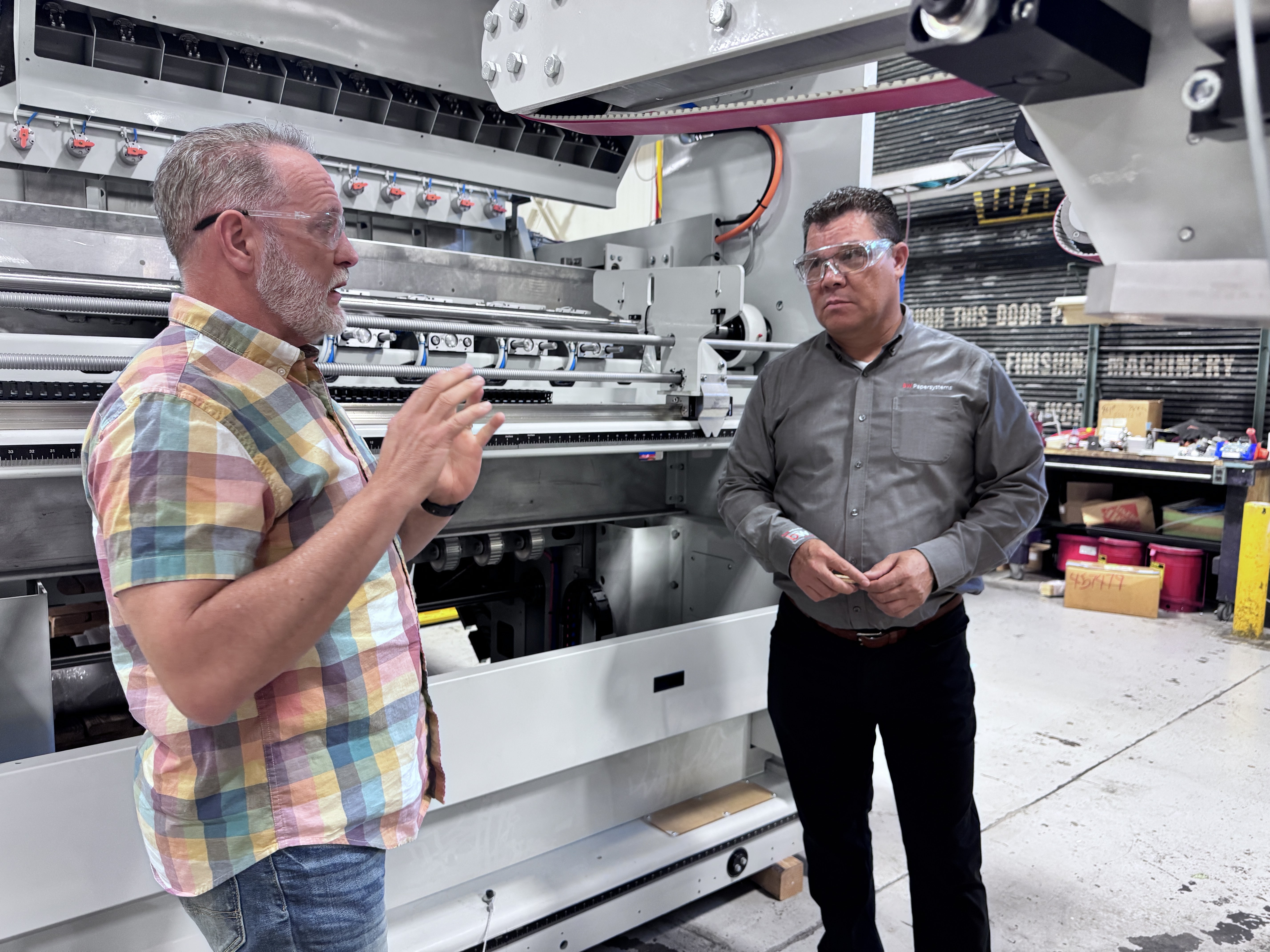
The key to market-driven growth and innovation, according to Maximo Leyva, VP of BW Papersystems’ Finishing product line, is “understanding the pain points that others are not solving for their customers. Because if we don’t understand that, there is little incentive for those customers to make a change.”
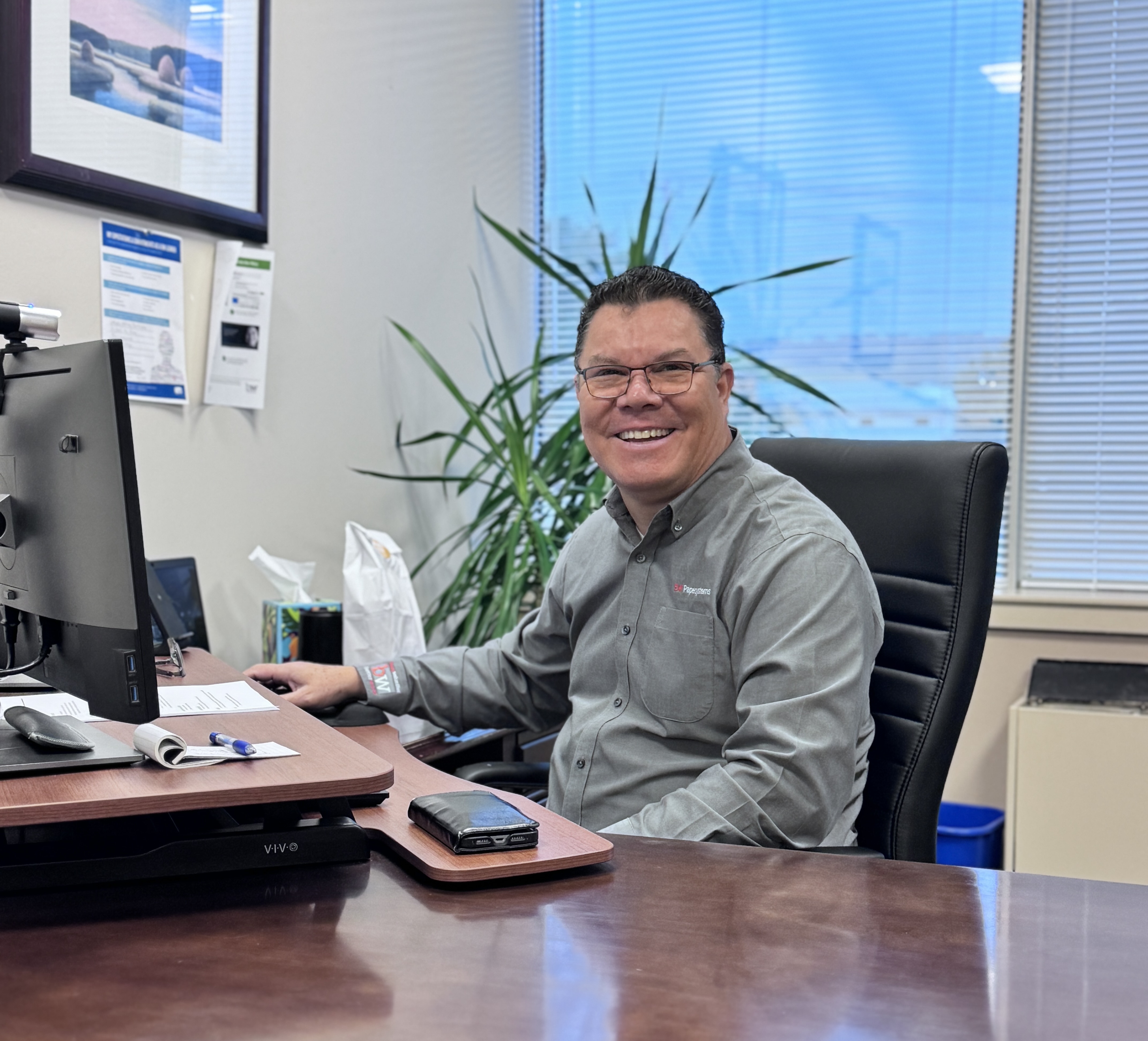
Maximo and his team took that insight to heart as they developed the FlexPro Flexo Folder Gluer, which launched in 2024. But the work to build a machine that truly met market needs began years before the FlexPro project got underway.
A Market Slipping Away
For decades, BW Papersystems (BWP) had thrived in North America with a well-earned reputation for rugged, gear-driven flexo folder gluers — machines that print, fold, and glue corrugated board into finished boxes in a single pass. But the industry was changing. Runs were getting shorter, setups more frequent, and customers needed machines capable of “setting while running” — changing print plates and preparing for the next job while production continued uninterrupted.
Competitors from Japan and Europe had developed servo-driven (smart-motor powered), fully automated machines that met this new reality. They captured the Asian market, dominated Europe, and were making serious inroads in North America.
“We were not getting invited to the party. We did not have the right products.”
A roughly $300 million global market for flexo folder gluers existed, and 70 percent of it was moving toward servo-driven automation that BWP couldn’t yet offer. In Europe and EMEA — a market equal to or larger than North America — BW held minimal market share. The message was clear: evolve or be left behind.
Building the Foundation First
Rather than rushing into a new product, Maximo’s team took a deliberate approach. The first priority was stabilizing the G-Grafix flexo folder gluer, launched in 2014, which was generating strong orders but also customer frustration. “In order for our customers to trust us with new technology, they needed to trust us today,” Leyva explained.
Once the G-Grafix was stable — they’ve since sold over 300 units — attention turned to two learning projects: the MaxPro, a high-speed die cutter that became BWP’s proving ground for servo technology, and an inside printing solution that captured a market trend toward single-pass printing and sold 60 units. By the time FlexPro design began, the team had already navigated servo architecture and proven their precision manufacturing capabilities. They had earned the right to take on the flagship challenge.
Listening Before Designing
When the FlexPro design process began in earnest, the team committed to something that had not always defined BWP’s product development: listening before building. Maximo and his colleagues visited customer plants across North America, including facilities running competitor machines. “Every customer that had a different solution — from Bobst, MHI, LMC — we wanted to see their application,” he said.
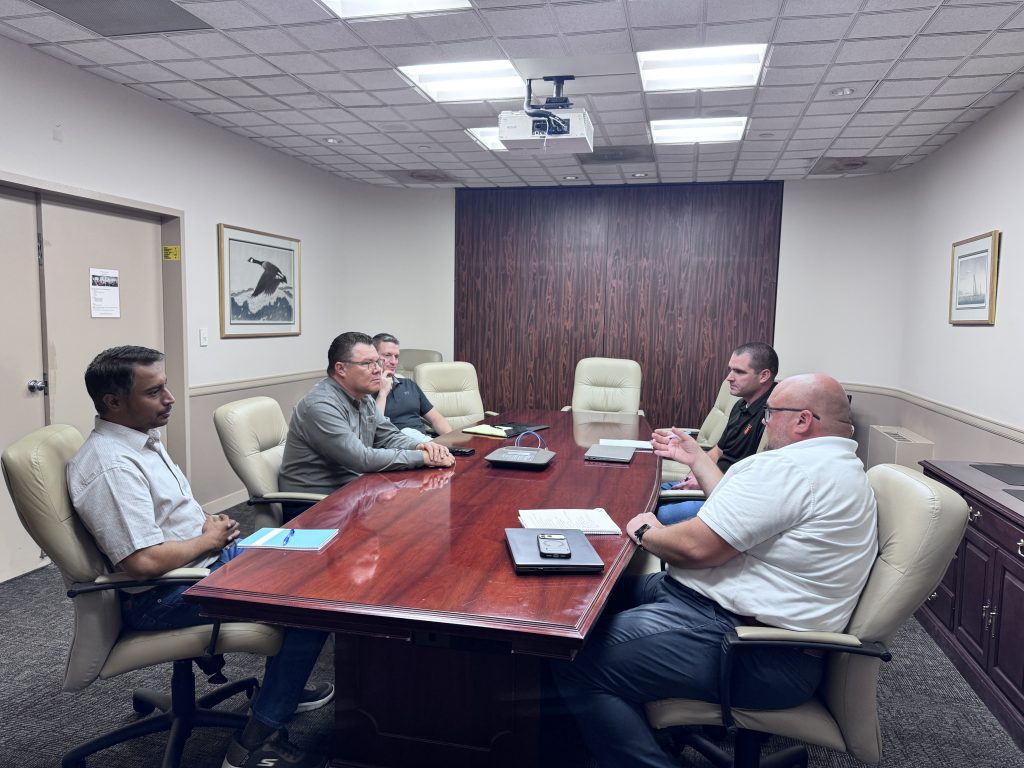
The conversations were illuminating. Customers praised competitors’ machines for speed and quality while describing a hidden tax: “I got this super-fast machine, it makes beautiful boxes, but it costs me too much to maintain. I spend half a million dollars or more every year just to keep it running.” Others described critical parts buried deep in the machine, turning routine maintenance into multi-day downtime events.
BWP also invited engineers and operations leaders of key customers to Baltimore for technical reviews and deployed its quality management system to capture input from field service and frontline teams. “We gathered as much information as possible and asked ourselves, how many customer pain points can we address?” Leyva recalled.
A critical hire further sharpened the picture: a retired executive from a major integrated box company who had personally bought many of the competitor machines the FlexPro would need to displace. When the team concluded a medium-speed machine would suffice, he pushed back: “That’s only going to allow you to compete here, not here.” That insight redirected the speed specification and became one of the machine’s defining characteristics.
Protecting a Core Strength: Die Cutting
One of the most important decisions in FlexPro’s development was preserving what BWP considers the “soul” of its finishing line: die cutting capability. Many high-speed international competitors had designed primarily for e-commerce RSC boxes — the kind Amazon uses — where die cutting isn’t required. Their machines’ die-cutting sections were underpowered or required significant speed reductions.
North American customers needed more. Agricultural packaging, industrial containers, boxes with handholds and custom cutouts — these applications demanded robust die cutting. “Customers found they could only run RSCs on the competitor machines,” Leyva explained. The FlexPro was designed to die cut at full speed, turning a longstanding BWP strength into a true competitive differentiator.
The Right Partner for Launch
When it came time to install the first FlexPro in production, BWP did something they had never done before. Rather than simply finding a buyer, they went looking for a partner —a customer with the resilience to work through the inevitable challenges of a new machine launch and the willingness to provide honest, continuous feedback.
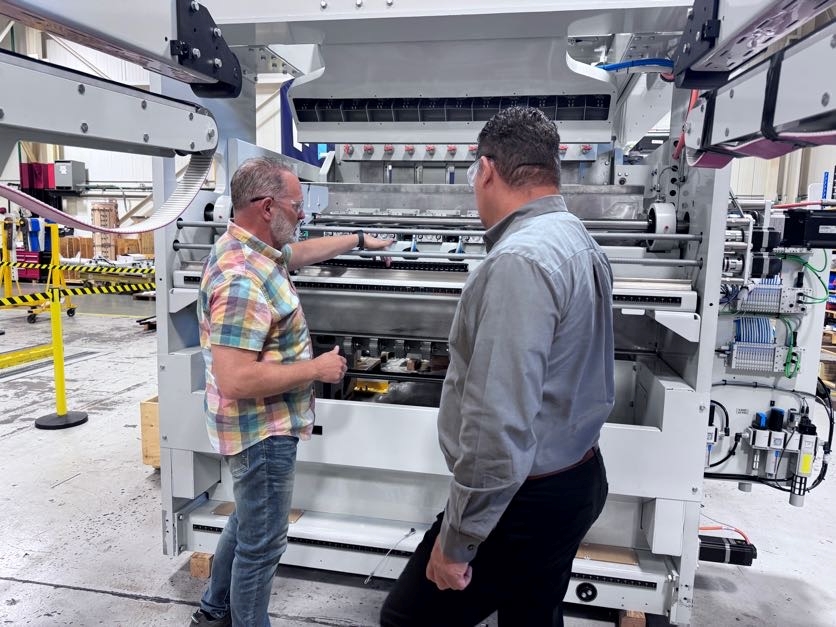
BWP provided purchase incentives and made a promise: they would be present through every step, with on-site resources and consignment parts until the machine performed to expectations. “We knew that was going to be months,” Maximo acknowledged. The collaboration went further than traditional commissioning — BWP set up an idea collection system for the customer’s operators, incentivizing suggestions for improvements, then recognized employees whose ideas were implemented. “This was a true partnership,” Maximo commented.
Since then, this customer has become BWP’s primary FlexPro demonstration site, opening their facility to prospective buyers — including those evaluating competitor machines — and enthusiastically advocating for the product they helped shape.
Earning the Right to Compete
The early results are strong. Two FlexPros are running in Italy, opening a foothold in a European market where BWP had nearly no presence. A major global box maker facing an aging equipment footprint is now buying multiple machines. And one of the world’s largest box makers sent a team to evaluate the FlexPro — arriving with computers and calipers — and left impressed. Every unit sold is, as Maximo put it, “directly gained market share” where BWP previously had zero.
The FlexPro also created opportunity within the organization. Jim Borch, a mechanical engineer on the Baltimore team, was chosen as technical leader for its development — an experience that ultimately earned him the role of Engineering Leader for Baltimore. “This project expanded my expertise beyond mechanical design and allowed me to develop leadership skills I hadn’t had a chance to build before,” said Borch.
“FlexPro is a game changer for BWP as it opened up a $300M market that we previously could not compete in,” said Neal McConnellogue, BWP’s President of Corrugating. “Maximo was totally committed to deliver the best for our team and our customers.”
The FlexPro is proof that patient, customer-led innovation — built on listening tours, voice-of-customer research, honest outside perspectives, and genuine partnership through launch — can open doors. “Innovations like the FlexPro secure the future for all of us,” said Maximo.