

The BW Converting platform was formed in 2022 when the legacy businesses of Paper Converting Machine Company (PCMC), Winkler+Dünnebier, Hudson-Sharp, Northern Engraving and STAX Technologies were brought together under a single umbrella. Then, in 2024, the Baldwin organization was integrated into BW Converting. With the new platform becoming more stabilized in 2025, the time was right to build out the Converting Technologies segment, which includes BW Converting’s Print Machine, Converting Machine and Auxiliary Equipment solutions for the flexible packaging, mailing/e-commerce, industrial manufacturing, textile, and commercial print markets.
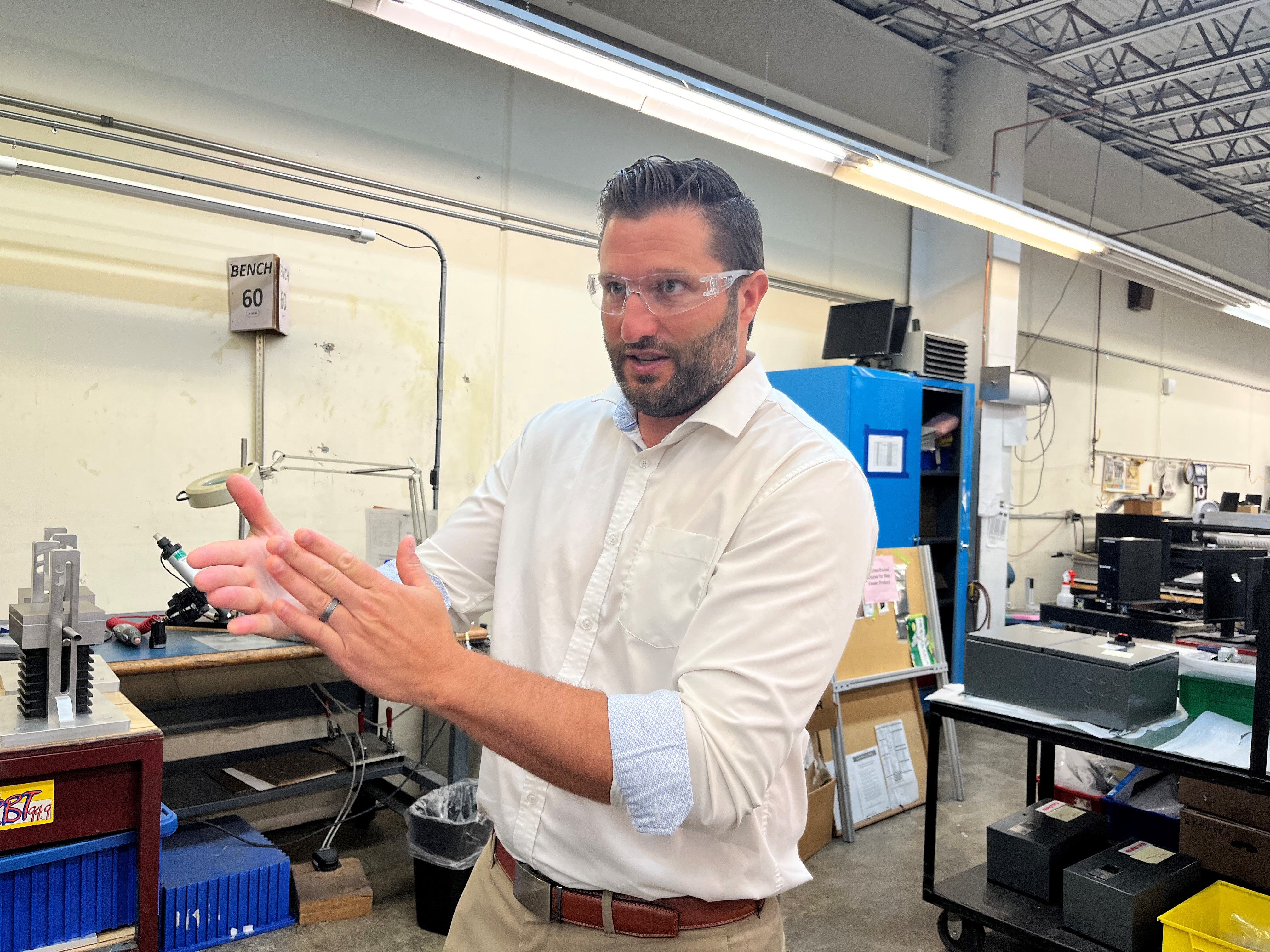
Patrick Keller, Converting Technologies President, is leading the build out and explained the complexity of the project. “The segment had grown through more than 10 acquisitions, bringing together over 100 active products, 10-plus manufacturing locations, site-focused leadership teams, 300+ hearts, and a wide range of processes and operating approaches across the organization. Aligning these diverse businesses into one cohesive global segment was not a simple task.”
According to BW Converting President Stan Blakney, Patrick is a Game Changer for “taking on the huge transformation of a team that was never really brought together effectively. He has tackled issues head on, rolling up his sleeves and diving into details, such as by going to Gemba. He is building a scalable organization that will exceed expectations.”
Matt Schleicher, BW Converting’s VP of Aftermarket Services, agrees: “Patrick has begun the process of focusing on growth areas, restructured his team to support this and brought new disciplines in to ensure our ability to execute on this. In doing this, he has shown both great care for people and partnership on what’s best for the business.”
Below, Patrick shares insights about building thriving teams.
Show them the new path to the future. We had to align our portfolio to be more simple, offering more standard options to free up engineering capacity so we also could focus on innovation. That meant deselecting products that teams had built for years. Within one of the legacy businesses, we had to end the life of 40% of the product portfolio. Many had an emotional attachment to those products. It became very important to give everyone visibility into the strategic direction, explaining to them the ideal future and path forward, why a more balanced approach serves us better, and why this is going to allow us to have a better day. Then you can begin to make the day better together.
Encourage collective ownership. Bob and Kyle talk about it as “playing your position well for the team.” I like to use the term “collective ownership” because we all own it— we all own the success or failure of the strategy. That’s why it needs to be all about making sure we’ve clearly defined the path to be the best. Then team members can align goals to that path, and tasks can be defined to meet the goals of their team.
Adopt a white paper mentality. Change is necessary to achieve our goals. But change makes people uncomfortable, which can be perceived as the opposite of our culture. That’s why designing an organization for growth requires a white paper mentality. The facts, evidence and steps to achieve the solution. You cannot build succession around the fiery passion of a few individuals, you must build it around the process, clearly defined process. That’s really what we’re trying to ingrain all the way to the core of the organization. Build the process so that everyone can have fiery passion about the project and change isn’t as difficult.
Change the Game is not about getting to $6B. Change the Game isn’t about achieving the $6 billion target. In the Operations area, what really resonates with them is “Are we having fewer quality problems?” “Where can I find this part?” It’s about making progress on our continuous improvement goals so that our teams can see the problems being actioned to reduce their frustration on a daily basis. Then they go home in a good mood and think “Yeah, I like working for this company” or “I would recommend this company to a friend”. Again, when we create the processes, efficiency and scalability, we will build the space for individuals to have confidence in what they’re doing and also provide the space to really focus on this innovation muscle we want to build. Then getting to $6B should be the natural outcome.
In the Operations area, what really resonates with them is “Are we having fewer quality problems?” “Where can I find this part?” It’s about making progress on our continuous improvement goals so that our teams can see the problems being actioned to reduce their frustration on a daily basis.
A leader’s job is to eliminate barriers. I encourage all of my team leaders to have one-on-ones with those in their span of care every week. It doesn’t have to be long; just a few minutes is often enough. But you have to be connected, you have to take time to listen to your teams to understand the barriers or gaps or problems they’re encountering as it is the leader’s job to eliminate them. It provides a regular opportunity to give feedback—positive or constructive–and keep them informed about progress toward the strategy. We can’t move the needle unless we listen and act on what is getting is the way of our team members doing their best work for the team.
Seek the leadership adrenaline shot. I learned very early on as a leader that seeing somebody else be successful because of my coaching was like an instant shot of adrenaline for me. In Converting Technologies, no one succeeds by themselves. Success through others is teamwork. I try to drive this idea of my team’s opportunity to be force multipliers to them every day. Think about the exponential impact leaders can have.
Go to Gemba. Observe your team’s work. This is especially important for senior leaders in a matrix organization. A lot of what we as leaders do “upstream” in the organization with designing the business and releasing orders impacts Operations downstream so understanding their pain points is critically important.
Challenge status quo continually. Every team member should do this. Ask yourself what can be made better. Don’t wait for someone else to improve what you can. It could be as simple as “Did I make a team member’s day better today?” Find a way to leave your legacy by playing your position better than you did the day before.
Beware the “swear”. I instituted an imaginary “swear” jar so if you say that you’re part of Hudson-Sharp or PCMC or STAX—any legacy BW Converting business, you owe a “figurative dollar”. You can’t call yourself part of those organizations anymore as they now represent our products. We work to instill this practice into every meeting, email, and conversation to ensure we are one team. People aren’t afraid to call each other out because we’ve built a safe space. The jar is a good reminder that, in BW Converting, we are all One Global Team and we should speak and act as such. And, in spite of the many “dollars in the jar”, I am very confident that our One Global Team is headed for a better day.
–As told to Mary Rudder, BW Director of Communications